Building a Unified Experience for Retail Frontliners
Delivering and scaling a staff app that unified fragmented tools across 1,000+ frontline employees.

PROJECT TYPE
Implementation
ROLE
UX/UI Designer
TIMELINE
Mar -Sep 2024
TEAM
1 designer & a cross-functional team of 15
THIS PROJECT FOCUSED ON:
UNDERSTAND PEOPLE
Field research
Customer interviews
Stakeholder interviews
Journey mapping
As the sole designer, I led the implementation of the Sales Staff App across 12 agile sprints, transforming the discovery vision into a tablet-based application that unified the tools staff relied on every day.
01 Challenge
Delivering value before the data ecosystem was ready.
We identified a tablet-based application as the highest-impact starting point for improving staff operations. However, the vision defined during discovery relied on data and systems that were not yet fully available or integrated.
The challenge was not simply to design the ideal product, but to determine how we could deliver immediate value while building toward the longer-term vision. This required balancing user needs, technical feasibility, and the realities of the client's evolving data ecosystem.

02 Approach
Building the foundation while designing for the future.
The first release focused on delivering value with the data and systems that were already available. Rather than waiting for every dependency to be ready, we prioritised foundational capabilities that could deliver value immediately.
Starting with site maps, user flows, wireframes, and a lightweight design language system, we established a foundation that could support future growth while remaining feasible within the client's technical constraints.
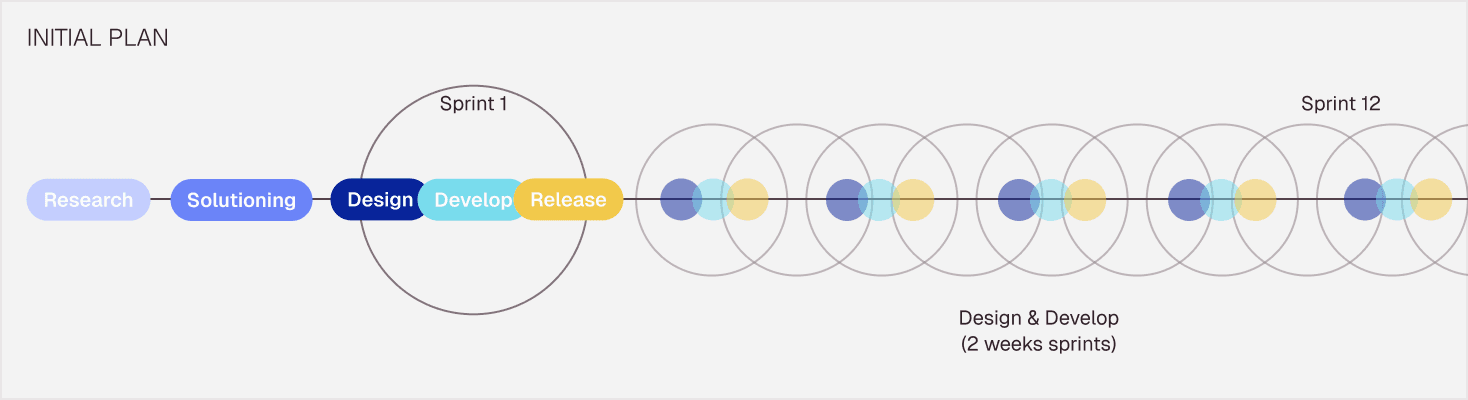
The product was delivered through agile sprints, allowing us to design, build, and release features incrementally as new data and systems became available.

03 adoption
Building trust alongside the product.
Adoption wouldn't happen automatically just because we built the product.
The success of the app depended not only on what we built, but also on whether users saw enough value to change their existing ways of working. This became one of the biggest challenges throughout the implementation phase.
While the team had a vision for how the app would grow, the initial release did not yet include all of the capabilities needed to replace the tools staff were currently using. As a result, we did not receive positive feedback from users in the early stages. During the first five sprints, many staff struggled to see the value of the app, and our approach to adoption often felt forced.
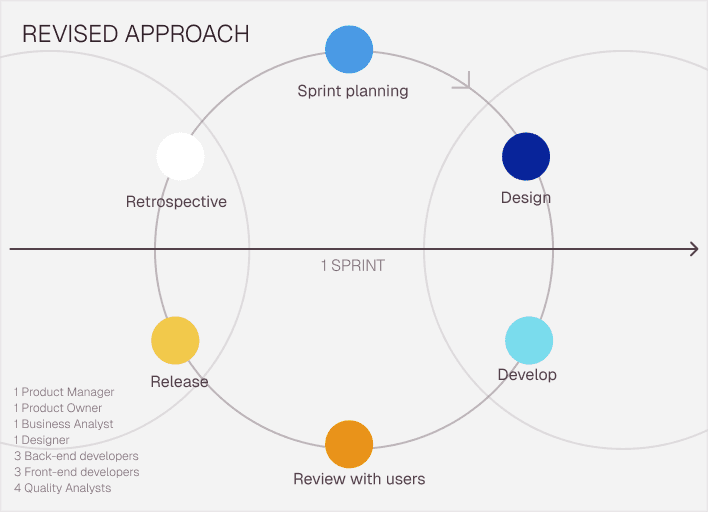
Users needed to see the vision, not just the product. Because they won’t adopt what they dont believe in...
To address this, we shifted our focus from simply delivering features to bringing users into the product's evolution. We refined the way we worked and communicated with staff, involving them more closely in the process and regularly sharing how their feedback was shaping the product. This helped users understand not only what the app was today, but also where it was heading, gradually increasing engagement, trust, and adoption.
Once we established an approach that worked, we built the app across 12 agile sprints, allowing us to iterate quickly, incorporate feedback continuously, and adapt to data availability as it evolved.
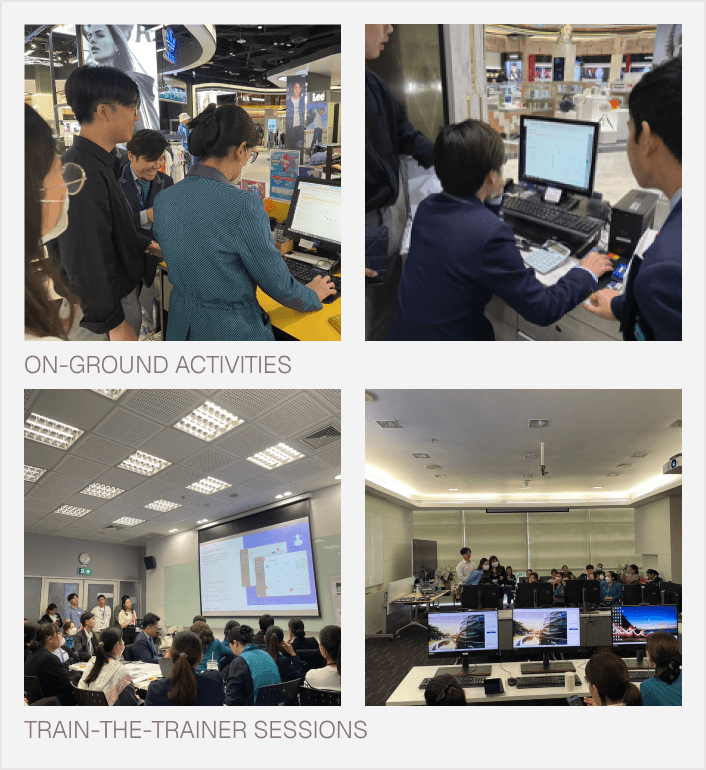

We maintained a regular cadence of on-ground visits to observe staff in context, keep our findings up-to-date, and prioritize features for upcoming sprints. At the end of each sprint, we ran a sprint review and demo with sales staff representatives, followed by a retrospective to reflect on what was working and what needed to change.
We also conducted train-the-trainer sessions at various branches to support adoption and help staff transition to new ways of working.
04 What we built
From six critical moments to features within the unified staff experience.
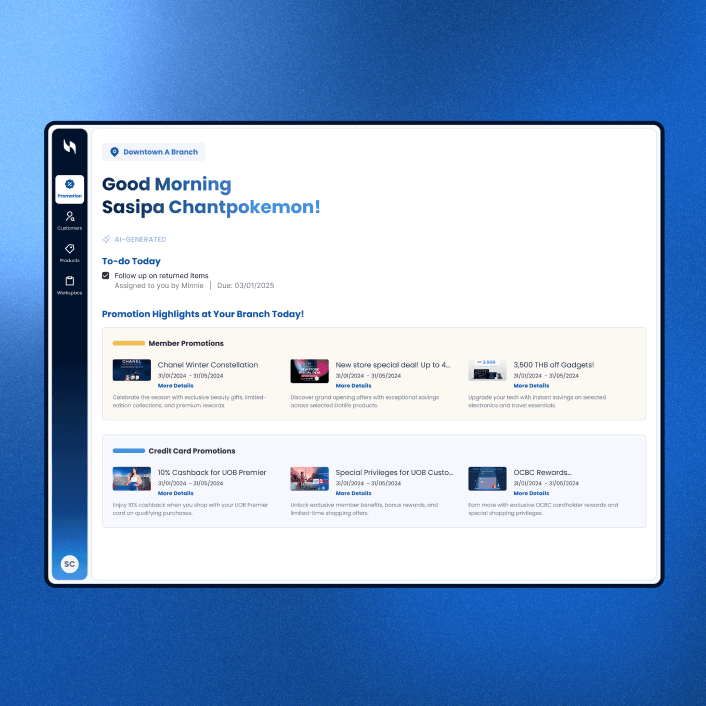
Personalized Dashboard
A personalised home screen that surfaces today's most relevant content based on the staff member's location, helping them start their day with the information they need.

Customer Search
Gave staff immediate access to customer and membership information from existing systems, reducing the need to switch between multiple tools while assisting customers.

Promotion Search
Surfaced accurate, up-to-date promotion information directly from business users, helping staff confidently answer customer questions and recommend relevant offers.

Product Inventory
Enabled real-time inventory lookup by SKU, eliminating the need for manual stock checks and improving visibility on product availability.

Top-Selling Products
Highlighted high-performing products using sales data, helping staff identify popular items and support sales conversations.

My Workspace
Provided a personal hub for task management, team briefings, and communications, bringing daily operational activities into a single place
05 outcomes
What we delivered...
A growing product, adopted by the people it was built with.
Adopted by 1,000+ frontline staff
Across 5+ branches, becoming part of staff's day-to-day workflow.
7,000+ page views per week
Engagement grew consistently as adoption increased throughout the rollout.
30+ minutes saved per staff per day
By reducing the need to switch between fragmented tools and manual processes.
The app launched successfully and continued to mature through all 12 sprints. At the close of the engagement, we enabled the client's internal team to take ownership of the product and continue evolving it independently.
04 reflection
What stayed with me...
Owning a product from the ground up
This project was the first time I felt true ownership of a product. As the sole designer across 12 sprints, I was involved throughout its evolution, from shaping the initial experience to supporting implementation, adoption, and long-term ownership by the client team.
Design doesn't end at launch
Seeing the product mature, gain adoption, and create value for its users remains one of my proudest professional achievements. It taught me that successful design is not only about creating great experiences, but also about driving adoption and enabling others to sustain and grow a product long after its initial delivery.
Stepping beyond design to see the bigger picture
As the project matured, I gradually stepped beyond my design responsibilities and took on aspects of Business Analysis and Project Management, including writing user stories, planning sprints, and helping drive delivery.
Experiencing the project through these different lenses gave me a much broader perspective on how products are delivered and the trade-offs teams make every day. It made me a better designer by helping me balance user needs with business priorities, technical constraints, and delivery realities.
Building a Unified Experience for Retail Frontliners
Delivering and scaling a staff app that unified fragmented tools across 1,000+ frontline employees.
PROJECT TYPE
Implementation
ROLE
UX/UI Designer
TIMELINE
Mar -Sep 2024
TEAM
1 designer & a cross-functional team of 15
THIS PROJECT FOCUSED ON:
UNDERSTAND PEOPLE
Field research
Customer interviews
Stakeholder interviews
Journey mapping
As the sole designer, I led the implementation of the Sales Staff App across 12 agile sprints, transforming the discovery vision into a tablet-based application that unified the tools staff relied on every day.
01 Challenge
Delivering value before the data ecosystem was ready.
We identified a tablet-based application as the highest-impact starting point for improving staff operations. However, the vision defined during discovery relied on data and systems that were not yet fully available or integrated.
The challenge was not simply to design the ideal product, but to determine how we could deliver immediate value while building toward the longer-term vision. This required balancing user needs, technical feasibility, and the realities of the client's evolving data ecosystem.
02 Approach
Building the foundation while designing for the future.
The first release focused on delivering value with the data and systems that were already available. Rather than waiting for every dependency to be ready, we prioritised foundational capabilities that could deliver value immediately.
Starting with site maps, user flows, wireframes, and a lightweight design language system, we established a foundation that could support future growth while remaining feasible within the client's technical constraints.
The product was delivered through agile sprints, allowing us to design, build, and release features incrementally as new data and systems became available.
03 adoption
Building trust alongside the product.
Adoption wouldn't happen automatically just because we built the product.
The success of the app depended not only on what we built, but also on whether users saw enough value to change their existing ways of working. This became one of the biggest challenges throughout the implementation phase.
While the team had a vision for how the app would grow, the initial release did not yet include all of the capabilities needed to replace the tools staff were currently using. As a result, we did not receive positive feedback from users in the early stages. During the first five sprints, many staff struggled to see the value of the app, and our approach to adoption often felt forced.
Users needed to see the vision, not just the product. Because they won’t adopt what they dont believe in...
To address this, we shifted our focus from simply delivering features to bringing users into the product's evolution. We refined the way we worked and communicated with staff, involving them more closely in the process and regularly sharing how their feedback was shaping the product. This helped users understand not only what the app was today, but also where it was heading, gradually increasing engagement, trust, and adoption.
Once we established an approach that worked, we built the app across 12 agile sprints, allowing us to iterate quickly, incorporate feedback continuously, and adapt to data availability as it evolved.
We maintained a regular cadence of on-ground visits to observe staff in context, keep our findings up-to-date, and prioritize features for upcoming sprints. At the end of each sprint, we ran a sprint review and demo with sales staff representatives, followed by a retrospective to reflect on what was working and what needed to change.
We also conducted train-the-trainer sessions at various branches to support adoption and help staff transition to new ways of working.
04 What we built
From six critical moments to features within the unified staff experience.
Personalized Dashboard
A personalised home screen that surfaces today's most relevant content based on the staff member's location, helping them start their day with the information they need.
Customer Search
Gave staff immediate access to customer and membership information from existing systems, reducing the need to switch between multiple tools while assisting customers.
Promotion Search
Surfaced accurate, up-to-date promotion information directly from business users, helping staff confidently answer customer questions and recommend relevant offers.
Product Inventory
Enabled real-time inventory lookup by SKU, eliminating the need for manual stock checks and improving visibility on product availability.
Top-Selling Products
Highlighted high-performing products using sales data, helping staff identify popular items and support sales conversations.
My Workspace
Provided a personal hub for task management, team briefings, and communications, bringing daily operational activities into a single place
05 outcomes
What we delivered...
A growing product, adopted by the people it was built with.
Adopted by 1,000+ frontline staff
Across 5+ branches, becoming part of staff's day-to-day workflow.
7,000+ page views per week
Engagement grew consistently as adoption increased throughout the rollout.
30+ minutes saved per staff per day
By reducing the need to switch between fragmented tools and manual processes.
The app launched successfully and continued to mature through all 12 sprints. At the close of the engagement, we enabled the client's internal team to take ownership of the product and continue evolving it independently.
04 reflection
What stayed with me...
Owning a product from the ground up
This project was the first time I felt true ownership of a product. As the sole designer across 12 sprints, I was involved throughout its evolution, from shaping the initial experience to supporting implementation, adoption, and long-term ownership by the client team.
Design doesn't end at launch
Seeing the product mature, gain adoption, and create value for its users remains one of my proudest professional achievements. It taught me that successful design is not only about creating great experiences, but also about driving adoption and enabling others to sustain and grow a product long after its initial delivery.
Stepping beyond design to see the bigger picture
As the project matured, I gradually stepped beyond my design responsibilities and took on aspects of Business Analysis and Project Management, including writing user stories, planning sprints, and helping drive delivery.
Experiencing the project through these different lenses gave me a much broader perspective on how products are delivered and the trade-offs teams make every day. It made me a better designer by helping me balance user needs with business priorities, technical constraints, and delivery realities.
Next project
Revamping the Hospitality App Experience
Designing a seamless end-to-end guest journey.
Designed and documented by sasipa s.
grateful for the people behind every project
Designed and documented by sasipa s.
grateful for the people behind every project